
Apple 2026 Launch: What It Means for Global Teams
The Apple 2026 Launch announcements and what they mean for IT and People global teams.


The question comes up every time an organization starts losing track of its devices. Someone in IT suggests implementing an MDM solution. Someone in finance points out they already have asset tracking in place. Then the debate starts, and it rarely ends with clarity.
MDM and ITAM are not competing solutions. They are not synonyms either. Organizations that treat them as interchangeable end up with gaps in coverage that become expensive and, in some cases, a serious security liability. Organizations that deploy both without understanding where each one applies end up with bloated tooling and redundant processes.
This guide exists to cut through that confusion. It explains what MDM and ITAM actually do, where they serve different purposes, and how to decide what your organization needs right now.
What MDM Actually Does
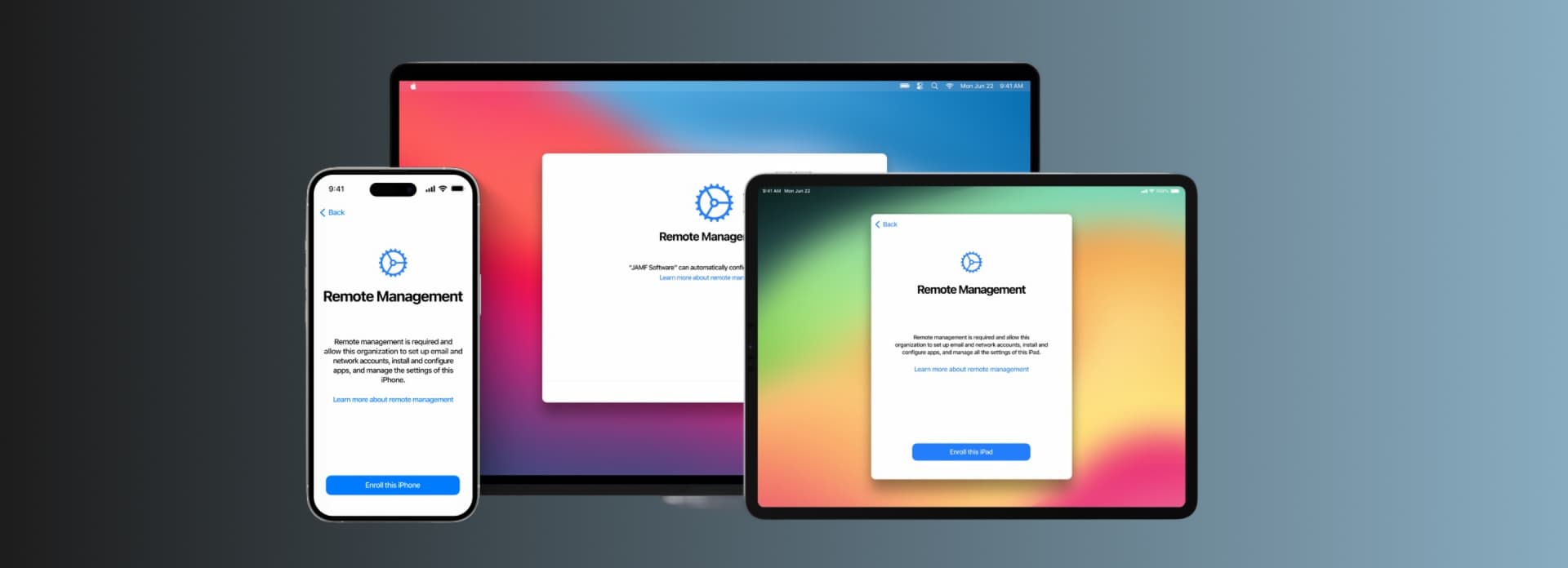
Mobile Device Management is a category of software that gives IT teams the ability to configure, monitor, and control endpoint devices remotely. The name is something of a relic. When MDM emerged as a discipline, the primary concern was smartphones and tablets used by employees outside the office. Today the same tooling is applied broadly across laptops, desktops, and any managed endpoint connected to the corporate environment.
What MDM is designed to do is enforce policy at the device level. An IT administrator can push configuration profiles, require encryption, enforce screen lock timers, and remotely wipe a device if it is lost or the employee who held it leaves the organization.
MDM operates in real time and is oriented around security and compliance. NIST Special Publication 800-124 provides a widely referenced framework for how organizations should approach MDM policy and implementation. The core capabilities of a well-implemented MDM platform include:
Remote configuration and policy enforcement across every enrolled device
Application management, including the ability to push, update, or remove software
Device health monitoring, including OS version compliance and security posture
Remote lock and wipe for lost, stolen, or offboarded devices
Conditional access controls that restrict network or application access based on device compliance status
What MDM does not do is give you a full picture of your hardware estate. It tells you about enrolled devices. It does not tell you about devices that have not been enrolled, devices that have been retired, devices in storage waiting for deployment, or the full financial and logistical context of your hardware inventory.
What ITAM Actually Does
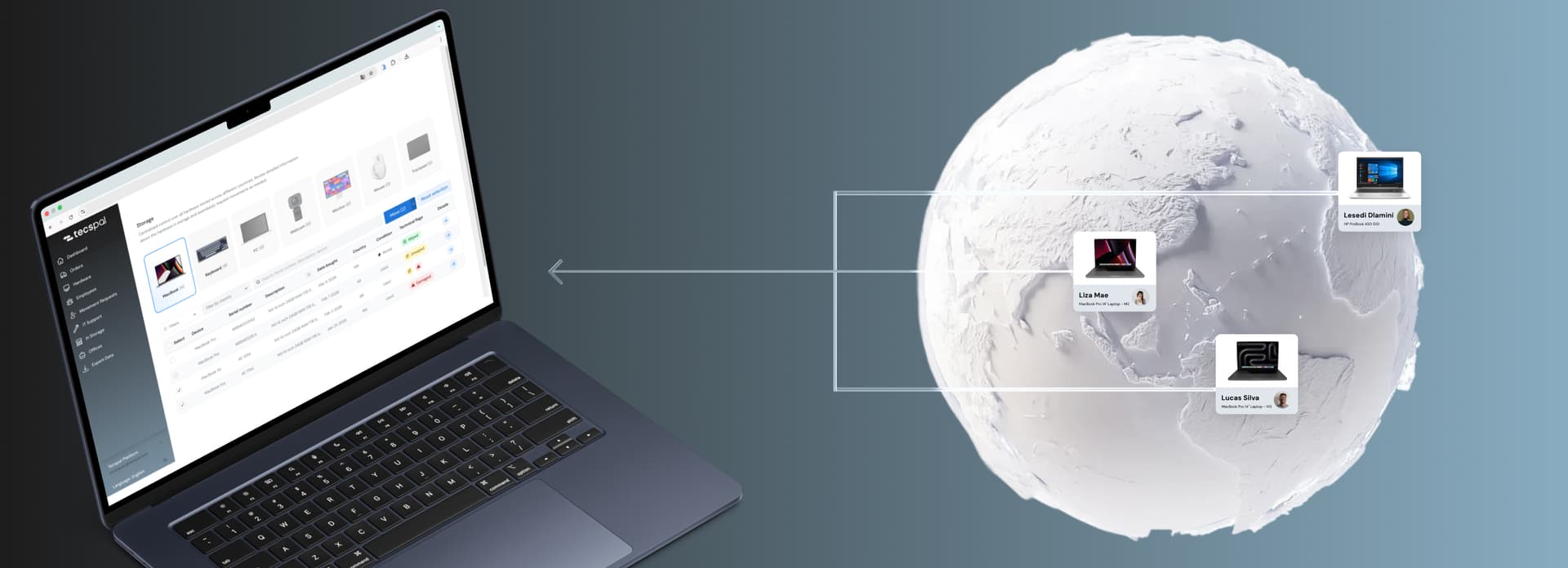
IT Asset Management is a broader operational discipline. Where MDM is concerned with the configuration and security state of active devices, ITAM is concerned with the full lifecycle of every asset the organization owns or leases, from procurement through retirement.
ITAM answers questions that MDM was never designed to address: What did we pay for this device? Who has it? When was it deployed? When does the warranty expire? What happens to it when the employee who holds it leaves? Has it been wiped and redeployed, or is it sitting in a closet somewhere?
A mature ITAM function tracks:
Every hardware asset in the fleet, including its purchase date, cost, serial number, assigned user, and current status
Software licenses across the organization, including utilization rates and renewal timelines
Vendor contracts and procurement history
Asset depreciation schedules and financial reporting data
End-of-life planning, including certified device wipe, resale, and recycling processes
ITAM is not a single tool. It is a combination of process, data discipline, and software that together give leadership visibility into the total cost and status of every technology asset the organization holds. In organizations with distributed or global teams, ITAM becomes significantly more complex because assets are spread across geographies, procured through different channels, and governed by varying local regulations.
MDM vs ITAM: Where They Overlap
The confusion between MDM and ITAM is not entirely without basis. There is genuine overlap in the middle of what each discipline covers, and some vendors have muddied the distinction further by marketing tools that blend elements of both.
Both MDM and ITAM deal with devices. Both require accurate data about what devices exist and who holds them. Some ITAM platforms include basic MDM capabilities, and some MDM platforms include inventory tracking features that resemble lightweight ITAM.
The overlap tends to concentrate in a few specific areas. Device enrollment and onboarding is one: a good ITAM process should trigger MDM enrollment as part of deployment. Device offboarding is another: when an employee leaves, both ITAM and MDM have a role in the process, with MDM handling the remote wipe and ITAM handling the retrieval, condition assessment, and redeployment or disposal.
However, the overlap is not a replacement. The fact that your MDM platform shows you a list of enrolled devices does not mean you have ITAM. That list is a security posture view, not a full asset record. It does not include devices in storage, devices that failed enrollment, devices procured but not yet deployed, or the financial and contractual context that ITAM is designed to capture.
MDM vs ITAM: Where They Do Not Overlap
The clearest way to understand the distinction is to look at what each tool cannot do.
What MDM cannot replace in an ITAM function
MDM has no concept of procurement. It does not know what you paid for a device, who the vendor was, or what the warranty terms are. It does not track software license agreements or renewal dates. It does not produce the financial reporting that finance teams need for depreciation schedules or budget forecasting. And it does not manage assets that are not enrolled, which means unmanaged devices, assets in storage, and anything outside the enrolled endpoint population are invisible to it.
What ITAM cannot replace in an MDM function
ITAM does not enforce device policy. It does not push configuration profiles, require OS updates, or remotely wipe a device. It does not provide real-time visibility into device security posture. It does not block a non-compliant device from accessing corporate applications. ITAM can tell you a device exists and who has it. It cannot control what that device does.
The two tools are solving different problems. One is a security and operations control plane. The other is an asset intelligence and lifecycle management system. Organizations that need both are not paying for redundancy. They are paying for coverage across two distinct requirements.
Do You Need Both?
For most organizations above a certain size and complexity threshold, the answer is yes. The more interesting question is which gaps are most urgent to close right now.
Employees access corporate email, data, or applications from personal or company-issued devices
Your team is distributed across locations and IT cannot physically touch every device
You operate in a regulated industry where device compliance and audit trails are required
You have experienced or are concerned about data exposure from lost or stolen
You do not have a reliable, current record of every hardware asset in your fleet
You are unable to accurately report on hardware spend, depreciation, or total cost of ownership
Employees are leaving and devices are not being consistently retrieved and redeployed
You are managing teams across multiple countries and have no unified view of your global fleet
Finance is asking questions about asset costs and you do not have confident answers
If your organization is small and your fleet is simple, a well-configured MDM platform with basic asset tracking may cover enough ground in the short term. But as headcount grows, as teams become more distributed, and as the financial stakes of hardware decisions increase, the gap between what MDM can tell you and what you actually need to know grows wider.

How to Build a Strategy That Covers Both
The goal is not to run MDM and ITAM as separate, disconnected systems. The goal is to integrate them so that data flows between the two and each one informs the other.
A practical approach looks like this: ITAM serves as the record of truth for every asset. When a device is procured, ITAM captures the financial and contractual details. When the device is deployed, ITAM triggers the MDM enrollment process. MDM then takes over as the operational control layer for that device throughout its active life. When the device is offboarded, MDM handles the remote wipe and ITAM records the retrieval, condition, and next disposition.
For organizations with global or distributed teams, this integration requires an additional layer of operational infrastructure. Devices need to be procured locally, deployed reliably, tracked centrally, and retrieved efficiently regardless of which country the employee is in. That is not a tooling problem alone. It is a logistics and process problem that the right operational partner can solve.
The organizations that manage this well tend to share a few characteristics. They have defined ownership for ITAM data quality. They have MDM enrollment as a mandatory step in onboarding rather than a best-effort process. They have offboarding workflows that are connected to HR systems so that no device falls through the cracks when an employee leaves. And they have a centralized view of their fleet that does not require pulling data from five different systems and reconciling it manually.
The Bottom Line
MDM and ITAM are complementary, not interchangeable. MDM gives you control over active devices. ITAM gives you visibility into the full lifecycle and financial picture of every asset you own. One without the other leaves meaningful gaps in either your security posture or your operational intelligence.
The organizations that are best positioned to manage IT costs, reduce risk, and scale efficiently are the ones that have both in place and treat them as a connected system rather than two separate checklists.
The question is rarely whether you need both. The question is which one to get right first.
Tecspal provides full lifecycle IT asset management across 150+ countries, combining global procurement, centralized tracking, and hands-on logistics so distributed teams have the equipment and visibility they need. Learn how Tecspal can close the ITAM gaps in your organization.
Explore our
topics
The Apple 2026 Launch announcements and what they mean for IT and People global teams.

Looking for the best corporate laptops? Compare top picks for remote teams by battery life, power and price, then see how Tecspal equips anywhere.
1 min read

Australian companies hiring in India: cost, talent and and why IT asset management can't be an afterthought.
1 min read



contact@tecspal.com
+1 305-450-4911
111 Pine St #1650, San Francisco, CA
Subscribe to our weekly newsletter to receive the latest news and updates.