
IT Asset Analytics: Metrics, Benefits & How to Start
Learn what IT asset analytics is, which metrics to track, and how to use device data to cut costs, reduce security risk, and plan refresh cycles.
1 min read

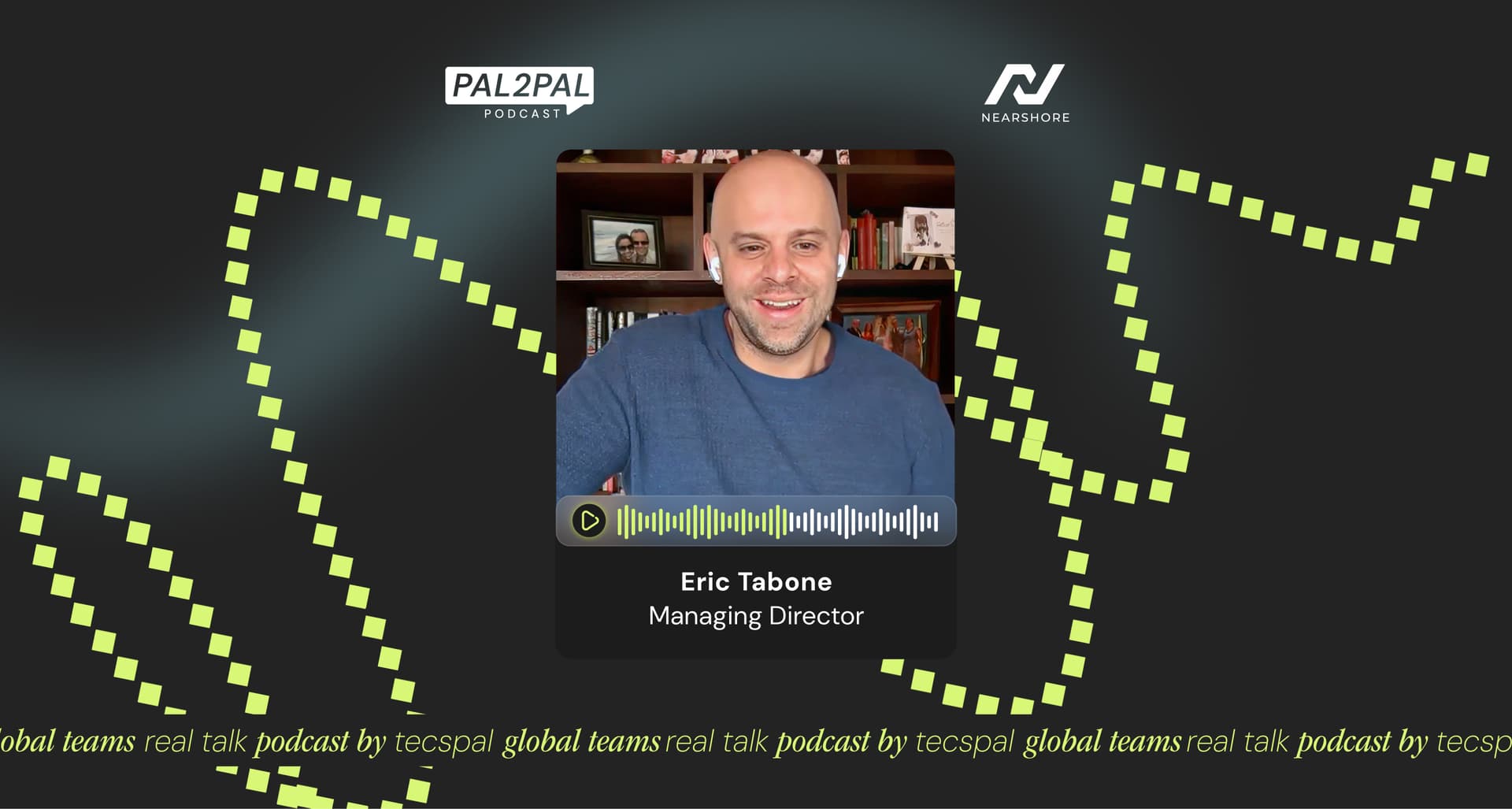
In Episode 6 of Pal2Pal, Mili from Tecspal sits down with Eric Tabone, founder of Nearshore Business Solution, to unpack what's actually shifting on the ground in Colombia — and what it means for companies building remote teams there. Eric has been working inside Colombia's hiring ecosystem for over a decade, operating across Latin America and advising US and European executives on nearshore strategy every day.
From a Supreme Court-contested wage decree to equipment reimbursement rules, contractor compliance traps, and Colombia's position relative to Brazil and Mexico, this episode cuts through the noise and delivers what decision-makers actually need to know.
Key Insights by Timestamp
[00:04] Welcome & episode intro
[00:48] The 2026 minimum wage increase: what happened and where things stand
[01:42] What every US and European executive should know before hiring in Colombia
[02:25] Is Colombia still a smart nearshore bet?
[03:20] How the wage increase affects hiring budgets and junior/mid-level roles
[04:11] CFO mindset: retention, performance, and the weakening dollar
[05:57] Equipment and internet reimbursement: what the new rules mean in practice
[07:30] The most common compliance mistakes in distributed Colombian teams
[08:51] What Colombian professionals actually value: flexibility, pay, and respect
[10:56] Colombia vs. Brazil, Mexico, Argentina, and Chile as hiring destinations
[14:16] When to bring in an expert vs. trying to navigate LATAM alone
[15:09] Tecspal's perspective: logistics, expertise, and equipping global teams
Episode Summary: Hiring in Colombia 2026 After the Reforms
1. The Wage Reform: What Actually Happened
At the start of 2026, Colombian President Gustavo Petro pushed through a 23.7% minimum wage increase by executive decree, bypassing Congress entirely. The move was almost immediately challenged, and the Supreme Court struck it down. Then came the attempt to reinstate it. As of recording, the situation remains legally unresolved.
Eric's stance is pragmatic: "My team and my clients are planning for a 23.7% increase. We just have to deal with it."
For companies hiring in Colombia, the takeaway is preparation. Political volatility around labor policy is a known variable in the market, not a new risk. Planning ahead is simply a good strategy.
2. Does This Directly Impact Your Hiring Budget?
For most companies hiring professional talent in Colombia, the answer is: not directly. Nobody is hiring at the statutory minimum wage of around $500/month. That bar exists far below the level of skilled tech, creative, or business roles.
Where the reform does create ripple effects is through a legal structure called the integral salary — a contract type that allows workers earning 10x the minimum wage or more to bundle benefits into a single figure. When the minimum goes up 23%, the integral salary ceiling moves with it.
The practical result? Some companies renegotiated contracts downward or let people go, releasing strong, experienced talent into the market. "Suddenly there's phenomenal talent out there looking for their next opportunity," Eric notes. The disruption for some is an opening for others.
3. The Weakening Dollar Factor: A Variable CFOs Are Underweighting
Wage inflation is only half of the equation. The other half is currency. US and European executives accustomed to strong dollar-denominated savings are finding that those dollars don't stretch as far in Colombia as they once did. Eric flags this as a pressure point many clients aren't adequately factoring in: "The current dollar doesn't go nearly as far as it once did."
The practical response is to have proactive compensation conversations before top performers start exploring their options. Waiting until someone has an offer on the table is too late. Companies that open transparent dialogue early, on salary, flexibility, and growth, are the ones holding onto their best people.
4. Retention Is Quality of Life
One theme ran clearly through Eric's experience speaking with hundreds of Colombian professionals each week: the most valued benefit after fair pay is remote work flexibility. Not four-day weeks, not exotic perks, but the ability to work from home.
In a city like Bogotá, a single commute can consume 90 minutes each way. For a professional earning a competitive salary, recovering three hours a day is worth an enormous amount. "That time is just completely invaluable," Eric says.
The formula for building a high-retention team in Colombia is straightforward: pay 10–20% above market rates, offer remote flexibility, and have honest conversations when things shift. "Companies who do take the lead on that are the ones well positioned to continue to build out and hire the best people in Colombia."
The math works in your favor too. Replacing an employee costs far more than the incremental cost of paying above market, when you factor in recruiting, onboarding, lost productivity, and institutional knowledge walking out the door.
5. Equipment and Reimbursement: The Minimum You Should Be Doing
New connectivity and equipment reimbursement rules in Colombia technically apply differently depending on employment structure, but Eric's advice cuts straight to the practical reality: if you're hiring someone to work for your company, send them a computer.
"If you're hiring somebody for $50,000 a year, which is still a discount for a role you'd pay far more for in the US, you should still be providing them with equipment to do their job. It's the least you can do."
Beyond legal compliance, it's a productivity and security issue. A senior developer spending their time waiting for a four-year-old laptop to load isn't just frustrated, they're losing hours every week. The cost of a laptop is negligible relative to what that person's output is worth.
6. The Three Compliance Traps to Avoid
Colombia offers three ways to structure employment: contractor, EOR (Employer of Record), or your own legal entity. Each comes with different obligations and different risks if mismanaged.
Contractors: The classification risk here is misclassification. If you define very rigid schedules, manage hours closely, or otherwise treat a contractor like an employee, you're creating legal exposure. Eric's rule: show clear independence in the relationship, or reclassify.
Employer of Record: A solid option for companies wanting compliance without local infrastructure. But not all EOR providers are equal, read the MSA carefully, understand the terms, and match the provider to your strategic needs.
Your own entity: More control, more complexity. Forming a legal entity in Colombia or anywhere in LATAM requires a lawyer who knows the local market. "Cross your T's, dot your I's," Eric says. This isn't a shortcut situation.
Eric's team has this conversation at least once every day. The decision matters more as teams scale.
7. Colombia vs. Brazil, Mexico, Argentina, and Chile: How to Think About the Map
Eric's work spans all of Latin America, and he's direct about how each market fits different hiring needs:
Colombia is the stable middle-ground option. Not the cheapest, not the most expensive. Strong talent pool across business, operations, and many technical roles. Around 10% less expensive than Mexico, 20–30% less than Brazil. One gap: specialized AI/ML engineering talent is less concentrated here than in some other markets, the educational system simply hasn't yet built the same pipeline.
Brazil is the biggest and most expensive market. Expect roughly 30% cost savings versus the US, but significantly less than Colombia. Brazil excels in client-facing, financial services, and consulting roles. Also a strong market for developers where the pipeline is more developed.
Mexico is geographically and culturally close to the US. Many professionals have spent significant time in the US or cross back and forth regularly, to the point where, as Eric puts it, "you have no idea you're dealing with people in Mexico." Strong for sales, customer success, and account executive roles.
Argentina is another market Eric works heavily. Strong technical talent and a deep pool of professionals with multinational experience.
Chile comes up less frequently but holds its own for certain executive-level and professional placements.
The strategic takeaway: there's no universal "best" country in LATAM. The right answer depends on the role, the seniority level, the required skills, and the company's tolerance for cost vs. specialization. Colombia is great, but it's not for every company, or every role.
8. When Local Expertise Is Worth More Than a Google Search
Eric is refreshingly candid about what his team does and doesn't offer: "There's no rocket science to what we do. But when you do something hundreds and hundreds of times a week, compounded over years, you've seen and done it all."
The argument for working with someone who lives and breathes a market isn't about complexity for complexity's sake, it's about the difference between textbook knowledge and pattern recognition. Knowing which errors appear at which stage. Knowing where to respond fast. Knowing what the current rate is for a senior product manager in Medellín right now, not six months ago.
That same principle applies to logistics and equipment, as Millie noted from Tecspal's side: "When you do something every day, you know which errors are going to appear, you know where you're going to get stuck." Hiring and equipping global teams are two sides of the same operational challenge. Getting both right requires people who've made the mistakes already.
Final Thoughts
Colombia in 2026 is a market in motion. A contested wage reform, currency shifts, and evolving labor compliance requirements all demand that companies pay closer attention than they might have two or three years ago.
But the fundamentals remain strong: a population of 50 million, a deep English-speaking professional talent pool, a stable political and safety environment that bears little resemblance to what Netflix has led the world to believe, and a cost structure that meaningfully undercuts the US and European hiring markets.
The companies that will build the strongest Colombian teams in 2026 are the ones doing the work upfront, understanding the compliance landscape, having honest conversations about pay and flexibility, and treating remote professionals as the global talent they are.
Pal2Pal Podcast by Tecspal: Listen Now
Get practical insights from Eric Tabone on navigating Colombia's 2026 labor reforms, building nearshore teams in LATAM, and how to structure hiring for cost, compliance, and retention.
Building a remote team in Colombia or Latin America? Tecspal helps companies equip their global talent from day one — from laptops to logistics. Contact us to learn more.
Explore our
topics
Learn what IT asset analytics is, which metrics to track, and how to use device data to cut costs, reduce security risk, and plan refresh cycles.
1 min read

Doubling your global team? Learn how to scale IT with standard kits, automated onboarding, local logistics and secure offboarding across 160+ countries.
1 min read

Global ITAM keeps procurement, onboarding, and offboarding running worldwide. See the real numbers, the rules, and what actually works.



contact@tecspal.com
+1 305-450-4911
111 Pine St #1650, San Francisco, CA
Subscribe to our weekly newsletter to receive the latest news and updates.